The gift of being seen: How good leaders help us recognize our own potential
Years ago, when I was working on Wall Street, the CEO put me in charge of a very large technology project. I hesitated. I did not think of myself as a technology expert, and I wondered whether someone with deeper technical knowledge would be a better choice.
The CEO, who was my boss, saw it differently. He sat me down and told me he had chosen me for a reason. The project would be complicated and involve a lot of people with different interests and priorities. He believed my ability to see the big picture, manage complexity and work with people was exactly what the project needed.
I was grateful that he saw something in me that I did not yet see in myself. Looking back, I realize that conversation was about much more than one project. It changed the way I thought about what I could do.
Most of us probably have had someone like that in our lives. A boss, teacher, mentor, colleague or friend sees a strength in us that we take for granted or a possibility we have not considered. Sometimes they recognize where we might go before we have imagined going there ourselves.
There is research behind this idea. In a classic Harvard Business Review article, Laura Morgan Roberts, Emily Heaphy and Brianna Barker Caza write about the “Reflected Best Self Exercise,” or RBSE, which asks people to gather stories from others about times when they were at their best. They describe affirmation as “a powerful way for us to grow.” The exercise is based on the simple premise that other people often notice things about us that we miss.
Sometimes that is because our own strengths do not feel particularly remarkable. If you are naturally good at bringing people together, recognizing patterns, communicating difficult ideas or staying calm when things become complicated, you may assume everyone can do those things. They cannot.
There is also evidence that some leaders may underestimate the impact they are having. A recent Learning News article reported on a 2026 People Insight analysis of 2,120 leadership assessments that found that both men and women generally rated themselves lower than their colleagues rated them. The gap was wider for women across every leadership competency studied, including strategy, influencing, agility and performance.
The researchers are careful not to label that simply a confidence problem. Higher standards, self-reflection and a desire to keep improving could also play a role. But People Insight managing director Tom Debenham captured the larger point when he said, “So many women are already having a stronger impact than they realize.” That should matter to anyone who leads people.
Leadership involves more than identifying gaps, correcting mistakes or helping people improve. It also requires noticing what someone already brings. Good leaders pay attention to the person who handles a difficult conversation unusually well, sees connections others miss, earns trust across groups or shows abilities that could grow into something bigger.
The best leaders share those observations. Or better yet, they create an opportunity to use those strengths.
My long-ago boss did both. He saw capabilities in me that I had not connected to the challenge in front of me, and then he trusted me with the opportunity to prove they were there.
Years later, I still remember that conversation. It reminds me that one of the greatest gifts we can give another person is to see more possibility in them than they currently see in themselves, and to support them in developing that potential.
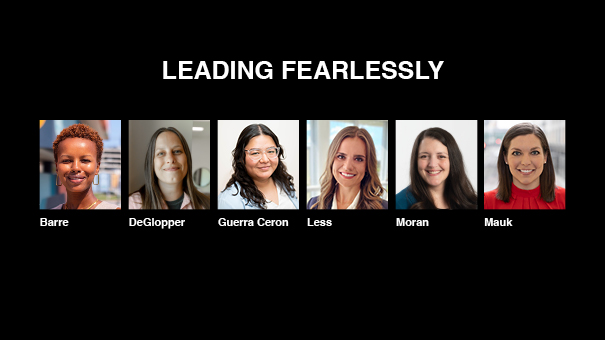
I turned to leaders and asked: “What was a strength or leadership skill that a boss, teacher or mentor saw in you before you ever recognized it in yourself? How did their recognition of that strength affect you or the way you saw your own potential?”
Amal Barre, strategic initiatives director, Homeward Iowa
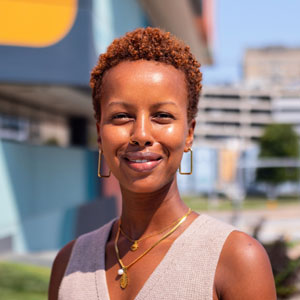
For a long time, I thought I needed a career with clear boundaries so that, when asked “What do you do?” I could offer an answer, and my mother would worry less about my future. Yet every attempt to choose one lane has led me somewhere with many.
I’ve come to see that I lead with curiosity, connecting people, ideas and ways of seeing across organizations, disciplines and places. In 2024, a mentor and collaborator invited me to lead a film and storytelling workshop for an environmental justice class. As a filmmaker whose work had shifted from advocacy and education toward experimental and artistic expression, I hadn’t recognized connecting ways of seeing as a leadership strength. They did.
They helped me see my career as multiple trails, distinct but intersecting. It gave me permission to stop explaining away my path and see it as something I bring to the table.
Betsy DeGlopper, director of marketing, Community Foundation of Greater Des Moines
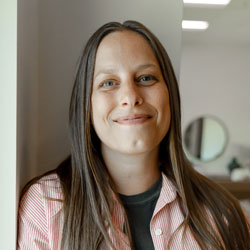
When I was a senior in high school, I was captain of the drumline in my school’s marching band. I was responsible for leading my fellow drumline members through warm-ups and practices, as well as teaching the basics of marching technique. That fall, my band directors nominated me for Student of the Month, and in their comments, they noted how I had grown into a strong leader, helping my peers improve both individually and as a unit.
I think that was the first time I really saw my own potential as a leader and realized that I could have an intentional, positive impact on the people around me. Looking back, I credit my band directors for giving me the opportunity to lead my peers and, in doing so, recognizing how that responsibility was helping me grow, too. Their encouragement gave me the confidence to seek out and step into leadership opportunities throughout the rest of my life.
Gabby Guerra Ceron, executive director, Al Éxito
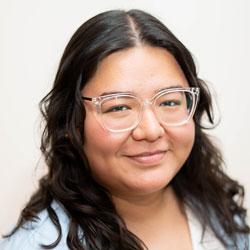
In fifth grade, I was incredibly shy and lacked confidence. I had only been in the U.S. for a little over three years and was still finding my place. One of my teachers told me he saw how intelligent and capable I was. He advocated for opportunities that would challenge me, including opening doors to a school that wasn’t initially available to me. That school eventually led me to another school where I had access to rigorous courses, college preparation and eventually a full college scholarship. All of this led to me becoming a first-generation college graduate. It all started because of one teacher who made sure to name my strengths out loud.
But his belief in me didn’t mean I immediately believed in myself. It took until college for me to really understand what he had seen years earlier.
That experience shapes how I lead at Al Éxito. Many of our students share backgrounds similar to mine, and we can be that nurturer for them. Through consistent relationships and opportunities, we help young people build confidence, develop leadership skills and recognize the potential already within them.
Rachel Less, commercial real estate representative, R&R Realty Group
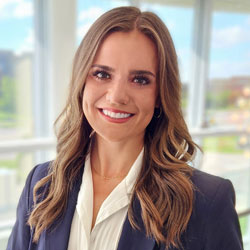
When I started in sales, I quickly realized it was a male-dominated field. In my first career, I didn’t have any female mentors. When I transitioned into commercial real estate, one of the people who made the biggest impact on me was a strong female on my team.
Early on, she told me, “You are smart, and you know what you’re talking about. Never let any man tell you otherwise.” At the time, I didn’t always believe that about myself. She saw confidence and potential in me before I did.
Her support helped me recognize my own value and trust my abilities. She showed me that I could be just as successful as the men around me and that I belonged in the room. Her advice gave me the confidence to be myself, speak up and stop second-guessing what I bring to the table. I still think about those words every day.
Erin Moran, chief communications and engagement officer, Young Women’s Resource Center
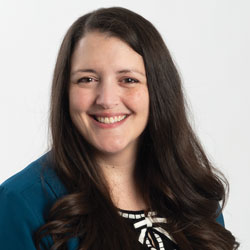
My ability to visualize situational variables and outcomes has not always been seen as an asset. At times, I was perceived as indecisive or an overthinker and I started to question my effectiveness.
One of the first times this skill was recognized as valuable was while I was assisting an event director. She noticed how I prepared multiple back up plans and quickly built trust with clients. This was further cemented when she asked for more input, showed appreciation for my thoroughness and entrusted me with solo events. I started to understand the professional alignment to this way of thinking and my confidence grew.
Something I carry with me from this experience is the long-term benefit of learning how teammates process information, communicate needs, and approach problem solving. Not only does this knowledge strengthen decision making, it also helps to avoid miscommunication and build trust within a team.
Renae Mauk, vice president of downtown development, Greater Des Moines Partnership

Early in my career, I often found myself in meetings with people who had been in their careers for many years and had developed confidence in sharing their perspectives. I didn’t always feel I had the same depth of experience to contribute. I remember one meeting where I had an idea but chose not to share it. Moments later, a teammate shared essentially the same idea. It took everything in me not to say, “I had the same idea!” But the reality was, they spoke up and I didn’t.
That stuck with me. I’m lucky that several leaders recognized I had thoughtful ideas and encouraged me to share them more often. Over time, I’ve become more confident in knowing when to contribute, how to communicate clearly and when to listen. I’ve learned that having a perspective is valuable, but it only creates value when you’re willing to share it.